Winter is often the season where interior painting becomes the...Read More

Winter is often the season where interior painting becomes the main focus. Exterior work gets harder to plan around rain, low temperatures, short daylight hours and damp surfaces, so many painters move indoors.
The problem is that winter interiors can come with their own set of drying issues. Rooms are colder, airflow is often limited, and moisture can sit in the air for longer. That can slow down drying between coats, extend recoat times, affect plaster drying, and make it harder to keep the job moving.
For trade painters, managing moisture and temperature is a big part of getting a good finish during the colder months.
Paint drying is not just about time. It is affected by temperature, humidity, airflow and the surface being painted.
In winter, the air can hold moisture, windows are often closed, and rooms can feel damp. Waterborne paints need moisture to leave the paint film as part of the drying process. When the room is cold and humid, that moisture leaves more slowly, which can delay recoat times and affect the final result.
This is where dehumidifiers, fans and heaters can make a real difference.
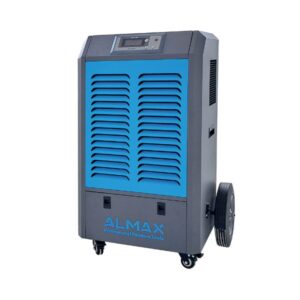
A commercial dehumidifier removes moisture from the air. For painters, that means better control of the room conditions, especially in enclosed spaces where damp air can hang around.
Using a dehumidifier on an interior job can help with:
At R&S Trade Centre, we stock commercial dehumidifier options suited to trade use, including the Almax Dellaria-100 Commercial Dehumidifier with Pump and the Fresca 90L Dehumidifier with Pump. These are built for larger interior areas, not just small household rooms – although they work excellent in these too!
The Almax Dellaria-100 is an industrial and commercial dehumidifier designed to help with paint and plaster drying issues, as well as drying concrete and timber. It suits enclosed areas up to 250m², has a built-in condensate pump with a 6 metre drain hose, easy-roll wheels, washable filter, automatic defrosting system and a sturdy powder-coated frame.
The Fresca 90L Dehumidifier with Pump (our most popular selling Dehumidifier) is also aimed at commercial and industrial use. It has been proven by New Zealand painters for better workplace efficiency and is designed for the range of climate conditions we deal with here. It also suits enclosed areas up to 250m² and includes digital controls, timer settings, humidity target settings, easy-roll wheels, a discharge pump and quick filter access.
For painters who only need one for a short period, we also have the Almax Dellaria-100 available for hire.
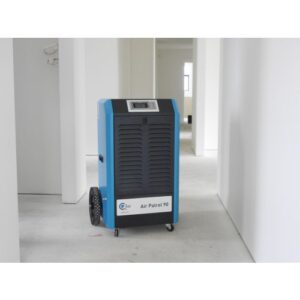
A dehumidifier and a heater solve two different problems.
A dehumidifier removes moisture from the air. This is ideal when the room feels damp, when plaster is taking too long to dry, when condensation is present, or when paint is staying tacky longer than expected.
A heater raises the temperature. This is useful when the room or substrate is too cold for the coating system being used.
For the best winter drying setup, painters often need a mix of moisture removal, heat and airflow. Heat alone will not always fix the issue if the room is still holding moisture. A dehumidifier helps pull that moisture out of the air, making the space easier to manage.
Diesel heaters are a strong option where the main issue is low temperature, especially in larger open areas, construction sites, warehouses, garages, workshops and well-ventilated interior work zones.
R&S stocks BE Fan Forced Diesel Heaters in 20.5kW and 37kW options. These are designed to heat small to large open areas, with the 20.5kW model rated for up to 158m² and the 37kW model rated for up to 288m².
Diesel heaters are useful for:
The 37kW BE Fan Forced Diesel Heater is also available as a hire option, which is a practical choice for short-term winter jobs.
Diesel heaters are powerful, but they need to be used correctly.
This matters because fuel-burning equipment can produce fumes and carbon monoxide if used incorrectly in enclosed or poorly ventilated spaces. Always follow the product instructions, maintain ventilation, keep heaters clear of flammable materials, and make sure the setup is suitable for the site.
For sealed rooms, tight residential spaces, or occupied homes, a dehumidifier with controlled ventilation will often be the better starting point. For open, ventilated sites where the temperature is the problem, a diesel heater can be the right tool.
For interior painting in winter, start by checking the room conditions. Is the space cold, damp, poorly ventilated, or all three?
If the space is damp, use a dehumidifier.
If the space is cold, use suitable heat.
If the air is still, add airflow.
If the space is enclosed, manage ventilation and safety first.
A good winter setup might be: